The Notre-Dame Basilica of Montreal: A Masterpiece
If you plan to visit Canada and you’re going to Montreal, this is definitely one of the places you have to see. If there’s one place in Montreal that will stop you in your tracks, make your jaw drop, and maybe even give you a little existential moment, it’s the Notre-Dame Basilica. This isn’t just a church—it’s a full-blown experience, a collision of history, devotion, and sheer artistic audacity. And the best part? There’s a story behind every inch of it, from the Protestant architect who converted to Catholicism to the mind-blowing AURA light show that turns the sacred into the surreal.
So, let’s step inside—and trust me, you’ll want to take your time.
The Architect Who Converted: James O’Donnell’s Leap of Faith
Picture this: It’s the early 1800s, and Montreal’s original 17th-century Notre-Dame Church is too small for its booming congregation. The city needs something grander, something that’ll make a statement. Enter James O’Donnell, an Irish-American architect from New York—a Protestant—tasked with designing the new basilica.
Now, here’s where it gets wild. O’Donnell, inspired by the Gothic Revival style (think Notre-Dame de Paris, but with a New World twist), poured his soul into the project. The deeper he got, the more the beauty of Catholic tradition got under his skin. By the time construction was underway, something inside him had shifted. In a move that stunned everyone, he converted to Catholicism—the only way, he said, he could truly complete his masterpiece.
And in a final twist of fate? He’s the only person buried in the basilica’s crypt. A Protestant-turned-Catholic, immortalized beneath the very floors he designed. If that’s not drama, I don’t know what is.
A Nave That Follows the Land: Genius in the Details
Walk into the main nave, and you’ll feel it—something’s different here. The floor slopes downward toward the altar, an unusual feature for a church. Why? Because O’Donnell cleverly followed the natural incline of the land as it descends toward the St. Lawrence River. Not only did this save on construction costs (smart!), but it also creates an almost theatrical effect, drawing your eyes toward the glittering sanctuary like a stage.
And oh, what a sanctuary it is.

The Choir: A Golden, Whispering Gallery
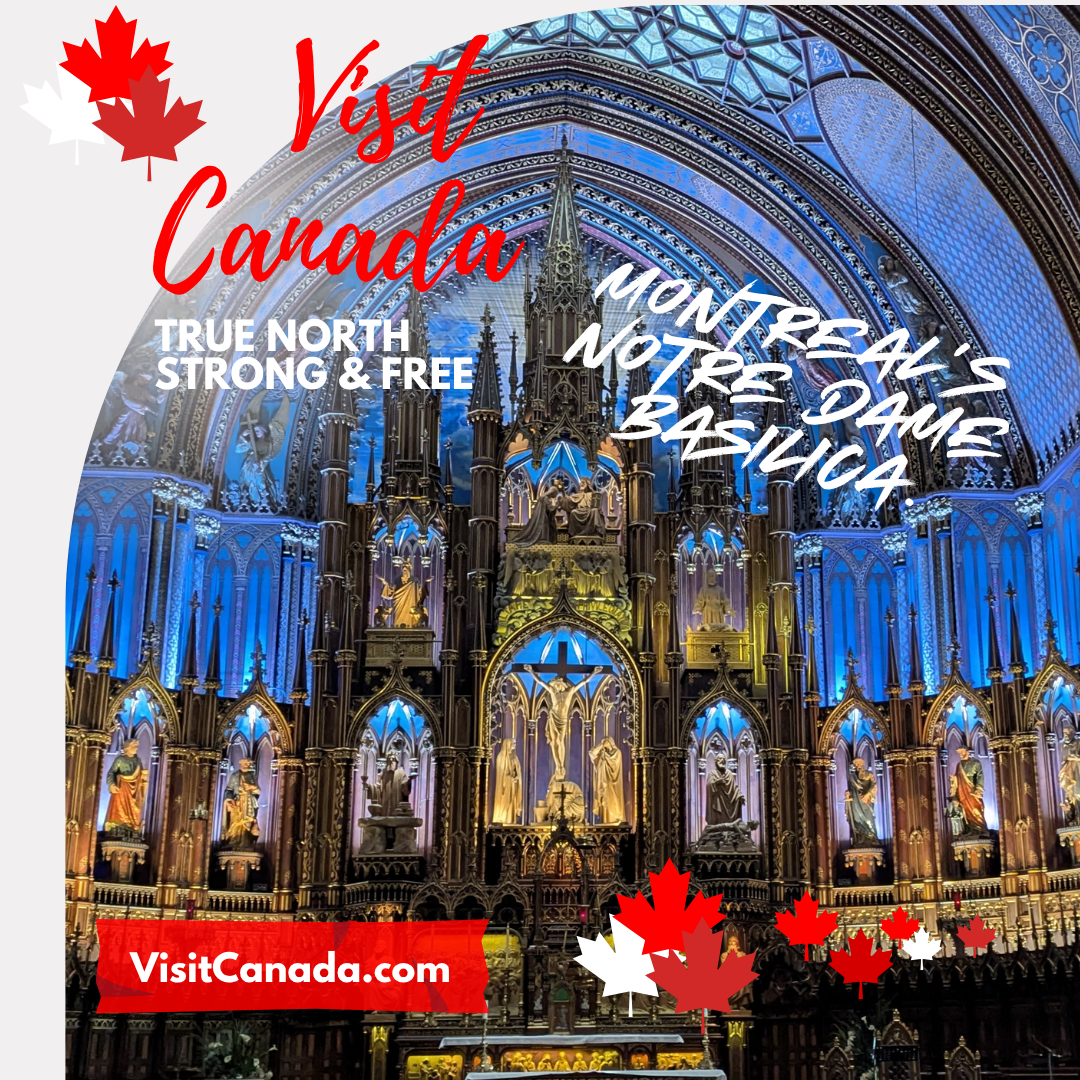
If the nave pulls you in, the choir makes you stop and stare. This is Baroque meets Gothic in a riot of walnut wood carvings, gold leaf, and statues that seem to lean in as if listening to your prayers. Every curve, every flicker of candlelight on gilded accents, feels intentional—like the artisans knew they were crafting something eternal.
But the real showstopper? The Casavant organ. Installed in 1891, this beast boasts 7,000 pipes, some so deep they vibrate in your chest. When it plays during Mass or concerts, the sound doesn’t just fill the space—it lives in it, echoing through the ribs of the vaulted ceiling like a chorus of angels.
AURA: When the Basilica Comes Alive
Now, if you think the basilica is breathtaking by day, just wait until you see it after dark.
AURA isn’t your average light show. It’s a full-body experience, a symphony of projections, music, and shadow that transforms the sacred space into something out of a dream. The altar glows, the vaults ripple with color, and for 45 minutes, you’re not just a spectator—you’re inside a living work of art.
Created by Montreal’s Moment Factory, AURA isn’t just pretty visuals; it’s a journey through Montreal’s spiritual heart, blending tradition with cutting-edge tech. And honestly? It’s one of the coolest things you’ll do in the city.
Final Thoughts: More Than a Church, a Story in Stone
The Notre-Dame Basilica isn’t just a relic of the past—it’s a place that breathes. From O’Donnell’s conversion to the sloping floor, from the golden choir to the thunder of the organ, every detail has a tale to tell. And with AURA, that story keeps evolving, proving that even after 200 years, this basilica still knows how to dazzle.
So, if you’re in Montreal, do not miss this. Step inside, look up, and let yourself be swept away. Because some places don’t just belong on a postcard—they belong in your memory, forever.
Have you seen AURA or stood beneath that golden choir? Drop your thoughts below—I’d love to hear your experience!